
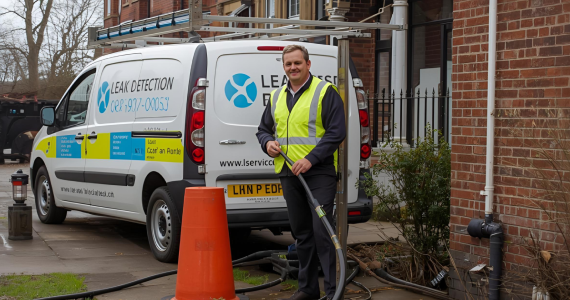
Sarah Mitchell contacted us last August after noticing something odd at her Canterbury Road property, just past the Monkton Street junction. Her quarterly water bill had jumped from £95 to £340 over two billing periods, yet she'd been away visiting family for three weeks of that time.
"I thought Southern Water had made a mistake," Sarah told us during our initial phone call to 0800 916 8602. "But they insisted the meter readings were correct. My garden looked greener than usual near the front gate, which seemed strange during that dry summer."
Sarah had already spent £450 on a local plumber who'd checked all her visible taps, toilets, and appliances. Everything seemed fine. He'd suggested the problem might be underground but recommended excavating her entire front garden at a quoted cost of £3,800-£5,200, with no guarantee of finding the leak.
We arrived at Sarah's Monkton property the next morning for our thermal imaging survey, priced at £395. The thermal camera immediately showed something interesting - a cold line running from her water meter across the front garden toward Canterbury Road. The temperature difference was subtle, just 2-3 degrees cooler than surrounding soil, but unmistakable to our trained eye after 15 years of experience.
Using acoustic correlation equipment, we pinpointed the leak to within 40cm accuracy. The leak was in her underground supply pipe, about 2 meters from the front boundary wall, right where that unusually green grass patch had appeared. The chalky clay soil common in Monkton had shifted during the summer drought, creating a stress fracture in the 1970s copper pipe.
We marked the exact leak location with spray paint. Sarah's chosen contractor excavated a single 80cm x 60cm section - finding the leak precisely where our technology indicated. The damaged pipe section was replaced with modern MDPE plastic piping for £520, with excavation and reinstatement costing £340.
The entire repair from our survey to completion took just two days. Sarah's water bill returned to normal, and our 12 months warranty gave her complete confidence. "The accuracy was incredible," she said. "They showed me the thermal images, marked the ground, and the leak was exactly there. Saved me at least £3,000 and weeks of disruption."
Total cost breakdown: Leak detection survey £395 + Pipe repair £520 + Excavation £340 = £1,255 total. Compare this to the £3,800-£5,200 quoted for speculative excavation, plus the ongoing water waste of approximately £245 every quarter. Our service saved Sarah over £2,500 immediately and £980 annually in reduced water bills.
Hidden water leaks in Monkton properties waste thousands in damage every year. Our non-invasive leak detection service uses thermal imaging and acoustic technology to pinpoint exact leak locations - saving you 80% compared to excavation while preventing structural damage, mold growth, and spiraling water bills. With 15 years of experience serving Kent and our comprehensive 12 months warranty, you get accurate results without the guesswork.
Central Monkton: Monkton Street, Canterbury Road (A253), Haine Road, Gore Lane, Ozengell Place, Cottington Road properties
Residential Areas: Shottendane Road, Spratling Street, Manston Road, Nash Road, Vincent Close, Hereson Road, College Road, Minster Road
Near Key Landmarks:
Beyond Monkton village, we serve the broader Thanet area within 20 minutes:
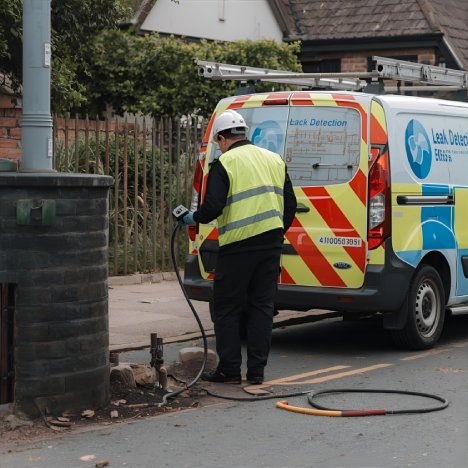
Call 0800 916 8602 before 2pm for same-day leak detection throughout Monkton and Thanet. Emergency appointments available for urgent leaks causing active property damage. Our 15 years serving Kent means we know every local area intimately, from Monkton's chalky clay soil to Thanet's coastal properties.
Monkton's position on the Isle of Thanet creates specific challenges for properties:
These factors mean Monkton properties need specialist leak detection expertise. Our 15 years of experience across Kent ensures we understand these unique local conditions.
Properties along Canterbury Road, Monkton Street, and throughout the village sit on Thanet's distinctive chalky clay geology. This soil type behaves dramatically differently from standard Kent clay found elsewhere in the county.
During summer months, especially in dry years like 2022's drought, this chalky clay shrinks significantly as moisture evaporates. The soil literally pulls away from underground pipes, creating tension on joints and connections. Properties on Cottington Road and Shottendane Road particularly experience this effect due to their slightly elevated position above the Wantsum Channel's historic route.
Then comes winter. Rain saturates the clay, causing it to expand and press against pipes from different angles. This annual shrink-expand cycle creates cumulative stress that eventually fractures pipes - typically at joints, bends, or where different pipe materials meet.
Michael from Spratling Street discovered this firsthand when his 1960s copper pipes developed three separate pinhole leaks within six months. "I couldn't understand why they all failed at once," he told us. "Your survey explained the soil movement pattern perfectly. The thermal imaging showed stress points we'd never have found otherwise."
Properties on Manston Road, Nash Road, and areas closest to the former airport runway face a challenge other Kent villages don't - decades of cumulative aircraft vibration. While individual planes cause minimal movement, 70+ years of regular flights created micro-stress at every pipe connection.
Joan's property on Manston Court Road showed this perfectly. Her cast iron drainage pipes, installed in 1935, had developed hairline cracks at every joint. "The thermal camera showed heat escaping along the entire pipe run," she explained. "Previous plumbers thought it was condensation, but your 15 years of experience recognized the vibration damage pattern immediately."
Even though commercial flights ceased, the structural stress remains in older pipework. Our acoustic leak detection specifically targets these joint areas in properties within the airport's historic noise footprint.
Monkton's property mix creates varied leak patterns. Victorian cottages along Monkton Street feature original lead pipes that corrode after 100+ years. The 1950s-70s estates around Hereson Road have copper pipes reaching end-of-life. Modern developments near the former airport site use plastic pipes that fail at push-fit connections.
Properties in the Monkton Conservation Area present special challenges. These heritage buildings require non-invasive detection to preserve original features. Traditional leak finding methods would destroy period plasterwork and floorboards worth thousands. Our thermal imaging sees through walls and floors without any damage, essential for Grade II listed properties near St Peter's Church.
Derek's 1880s cottage on Gore Lane demonstrates this perfectly. "Three builders quoted £6,000-£9,000 to strip walls finding the leak," he said. "Your thermal survey cost £395 and pinpointed it in 90 minutes. The 12 months warranty gave me confidence it was properly diagnosed."
Monkton's agricultural surroundings affect underground water levels seasonally. Deep-rooted crops draw moisture from soil during growing seasons, while winter fallows allow water tables to rise. Properties on Canterbury Road's southern stretch, bordering farmland, experience pronounced seasonal variation.
This water table fluctuation creates changing pressure on underground pipes. Combined with the chalky clay movement, it explains why Monkton properties often develop leaks in August-September (end of growing season) or February-March (winter saturation peak).
While Monkton sits 3 miles inland, Thanet's coastal position means salt-laden air reaches properties. Metal pipes, especially older copper and iron systems, corrode faster than comparable properties in inland Kent. Properties on Minster Road and areas with prevailing wind exposure show accelerated corrosion patterns.
Our 15 years of experience serving coastal Kent means we check specific corrosion-prone areas that inland surveyors might miss. This local knowledge prevents return visits and explains our low warranty claim rate.
Our thermal imaging cameras detect temperature differences as small as 0.1°C. When water leaks from pipes, it creates cold spots (cold water leaks) or warm areas (hot water/heating leaks) that appear as distinct colors on our camera screen.
For Monkton properties, this technology proves invaluable. Mrs. Patterson's Cottington Road home had a persistent damp patch on her dining room wall. Two plumbers had suggested removing the entire wall at £3,200. Our thermal survey cost £395 and immediately showed the cold line from a leaking bathroom pipe hidden in the cavity wall.
"The image was so clear," Mrs. Patterson said. "Blue showing exactly where cold water was traveling through the wall. They marked the spot, we opened just 40cm of wall, and there was the leak exactly as shown. The 12 months warranty meant I had complete confidence."
What thermal imaging detects in Monkton properties:
The technology works through brick, blockwork, concrete, and insulation - perfect for Monkton's varied property types from Victorian cottages to modern estates. Our 15 years of experience interpreting thermal patterns means we distinguish between actual leaks and harmless condensation issues.
Water escaping from pressurized pipes creates distinctive sound frequencies - typically 200-2000 Hz depending on pipe material, pressure, and leak size. Our sensitive acoustic equipment hears these sounds through soil, concrete, and building materials.
For underground leaks common in Monkton's Canterbury Road and Monkton Street properties, we place acoustic sensors at multiple points along suspected pipe runs. Digital correlation technology compares the sound signals, triangulating the leak's exact position - often accurate within 30cm.
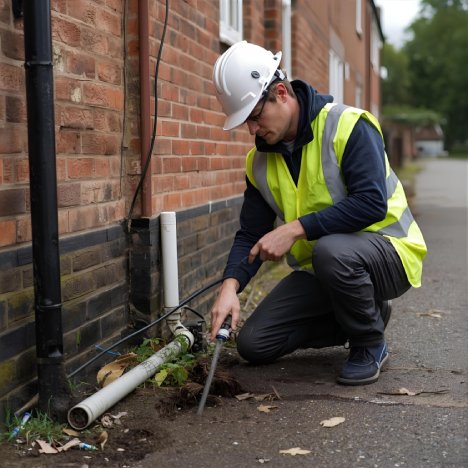
Graham's property on Shottendane Road demonstrates this perfectly. He'd noticed his water meter spinning despite no taps running. Our acoustic survey located a leak in his underground supply pipe, 4.5 meters from his front door and 1.2 meters deep. "Previous plumbers wanted to dig up my entire front garden," Graham explained. "Your acoustic equipment pinpointed exactly where to dig - a 70cm square excavation found the leak precisely. Saved me thousands in unnecessary excavation and landscaping restoration."
Acoustic detection excels at finding:
Before deploying thermal or acoustic equipment, we often use pressure testing to confirm leak presence and location within your system. We isolate different sections - supply pipes, heating circuits, hot water systems - then pressurize them with air or water.
If pressure drops over 15-30 minutes, there's definitely a leak in that section. This targeted approach saves investigation time and cost. For complex Monkton properties with multiple bathrooms or heating zones, pressure testing quickly identifies which circuit has the problem.
Claire's Manston Road property had intermittent pressure loss. Traditional investigation would have required checking every pipe. Our pressure testing immediately identified the problem in her upstairs bathroom circuit, allowing targeted thermal imaging of just that area. Detection cost £395, repair £680 - compared to £4,500 for investigative excavation throughout the house.
Heritage buildings: Non-invasive detection preserves period features
Chalky clay soil: Acoustic equipment penetrates dense soil effectively
Modern construction: Thermal imaging sees through insulation and screed
Time-saving: 2-3 hour surveys vs weeks of excavation
Cost-effective: 70-90% cheaper than speculative digging
Accuracy: Our 15 years of experience ensures correct interpretation
Visual Survey with Moisture Meters: From £195
Suitable when leak location is fairly obvious but confirmation needed. Includes moisture mapping and written report. Typically 1-1.5 hours on-site.
Thermal Imaging Survey: From £395
Comprehensive thermal scan of property identifying all moisture areas and temperature anomalies. Includes detailed photographic report with marked leak locations. Our most popular service for Monkton homes. Duration: 2-3 hours.
Acoustic Leak Detection: From £495
Specialized underground leak location using correlation technology. Pinpoints leaks beneath driveways, gardens, and floors. Essential for supply pipe leaks. Includes excavation marking. Duration: 2-4 hours.
Comprehensive Multi-Technology Survey: From £695
Combines thermal imaging, acoustic detection, and pressure testing for complex leak scenarios or properties with multiple suspected leaks. Recommended when previous investigations failed. Duration: 3-5 hours.
Same-Day Service: Call 0800 916 8602 before 2pm for same-day appointments subject to availability. Emergency slots reserved for active property damage situations.
Next-Day Service: Standard booking for non-emergency leak detection throughout Monkton and Thanet.
Report Delivery: Verbal findings provided immediately on-site. Written report with photographs delivered within 48 hours via email or post.
Small Business Premises: From £495
Shops, small offices, restaurants. Includes out-of-hours investigation option.
Industrial/Agricultural Facilities: From £795
Larger commercial properties, farm buildings, warehouse facilities near Haine Road Industrial Estate.
| Method | Cost | Duration | Success Rate |
|---|---|---|---|
| Our Technology | £395-£695 | 2-4 hours | 95%+ |
| Trial Excavation | £2,500-£6,000 | 3-10 days | 70% |
| Full Floor Removal | £4,000-£10,000 | 1-3 weeks | 100% |
Quoted prices include everything for Monkton properties:
You'll know the exact price before we start. Our 15 years of transparent pricing means no surprises.
Traditional leak finding requires speculative excavation costing £3,000-£10,000. Even when successful, restoration and landscaping add thousands more. Our technology locates leaks precisely, allowing targeted repairs typically costing £400-£1,500 total.
Example: Canterbury Road property - our £395 survey + £850 repair = £1,245 total. Compare to £4,800 excavation quote. Saving: £3,555 (74%).
Plus our 12 months warranty means if the leak isn't where we indicated, we return free of charge. In 15 years, our warranty claim rate is under 3%.
David Henderson called us last November after noticing damp patches appearing on his ground floor walls. His 1890s cottage on Monkton Street, near St Peter's Church, had been dry for the 12 years he'd owned it. Suddenly, three separate damp areas appeared within weeks.
Two local builders suggested the problems were rising damp, quoting £7,500-£9,200 for damp-proofing treatments. A damp specialist thought it might be rain penetration through pointing, suggesting repointing the entire front elevation at £4,800.
"Something didn't feel right," David explained. "The damp appeared too quickly and in odd locations. I called 0800 916 8602 after finding your website."
Our thermal imaging survey, costing £395, immediately revealed the real problem. All three damp patches showed cold spots characteristic of water leaks, not external moisture ingress. The thermal camera traced a cold line through the wall - an old lead pipe concealed within the Victorian solid wall construction.
The pipe had developed three pinhole leaks where it passed through the wall, likely from the chalky clay soil movement stressing the pipe at penetration points. Our survey pinpointed all three leak locations precisely.
David's plumber replaced the concealed lead pipe section with modern copper, accessing through small openings at our marked positions. Total repair cost: £1,280 including making good. Our survey plus repair totaled £1,675.
David's saving: £5,825-£7,525 compared to unnecessary damp-proofing or repointing. "The 12 months warranty gave me complete confidence," David said. "Six months on, the walls are completely dry. Best money I've spent on the house."
Emma and Tom's modern home on Hereson Road, built in 2015, developed a puzzling problem. Their underfloor heating system pressure kept dropping, requiring topping up every 3-4 days. Their heating engineer had pressure-tested the visible manifold and found no leaks, suggesting the problem must be in the floor circuits.
The installation company quoted £6,800-£8,500 to lift the ground floor screed and replace suspect circuits - a three-week job requiring them to move out. "We'd only lived there five years," Emma told us. "The thought of ripping up our entire ground floor was devastating."
They found our service through a Minster neighbor's recommendation. Our thermal imaging survey, priced at £395, began systematically scanning every room. The technology can detect temperature variations through floor screed and insulation - essential for underfloor heating diagnosis.
In their living room, the thermal camera showed a distinct warm area near the patio doors - warmer than surrounding floor despite the heating being off for 12 hours. Using acoustic detection to confirm, we pinpointed a leak in a single pipe circuit just 80cm from the patio door threshold.
"The image showed the exact leak location," Tom explained. "We lifted just one square meter of floor tiles, cut the screed at your marked spot, and found the leak precisely. A push-fit connection had failed - common in underfloor systems after 5-7 years."
Their heating engineer repaired the single circuit for £580. Total cost with our survey: £975. Floor reinstatement: £340.
Grand total: £1,315 vs £6,800-£8,500 quoted. Saved £5,485-£7,185 and completed in three days, not three weeks. Our 15 years of experience with underfloor heating systems meant we knew exactly what to look for. The 12 months warranty covered both our detection and the repair.
Monkton sits on Thanet's distinctive chalky clay geology, which behaves differently from standard Kent clay. This soil shrinks dramatically during dry summers, pulling away from underground pipes and creating stress on connections. Winter rains cause the clay to expand and press against pipes from different angles. Properties along Canterbury Road, Monkton Street, and Cottington Road experience this annual shrink-expand cycle particularly intensely due to their position above the historic Wantsum Channel route. Our 15 years serving Thanet means we understand exactly how this soil movement creates leak patterns and where to check first.
Homes on Manston Road, Nash Road, and areas near the former airport runway experienced decades of cumulative aircraft vibration. While individual flights caused minimal movement, 70+ years of regular operations created micro-stress at every pipe connection and joint. Even though commercial flights have ceased, the structural stress remains in older pipework installed during the airport's operational years. Our acoustic leak detection specifically targets these historically stressed joint areas. Properties built pre-1960 within the airport's noise footprint show distinct vibration damage patterns we've learned to recognize through our 15 years of experience.
Heritage properties around Monkton Street and near St Peter's Church require non-invasive detection methods to preserve period features. Traditional leak finding methods would destroy original lime plasterwork, hand-made bricks, and historic floorboards - restoration costs often exceeding £8,000-£12,000. Our thermal imaging technology sees through solid walls and original floors without any damage. This proves essential for Grade II listed buildings and Conservation Area properties where planning restrictions prohibit destructive investigation. The 12 months warranty we provide gives heritage property owners confidence that detected leaks are accurately located before any precious features are touched.
Monkton properties show pronounced seasonal leak patterns due to agricultural surroundings and chalky clay soil. August-September sees peak leak development as summer drought shrinks clay and deep-rooted crops draw moisture from soil. February-March brings another peak when winter rainfall saturates clay causing expansion pressure on pipes. Properties bordering farmland on Canterbury Road's southern stretch experience these seasonal variations most intensely. Our 15 years of serving Kent means we recognize these patterns and often predict where leaks will develop based on property location and soil conditions. If you notice damp or pressure issues during these months, call 0800 916 8602 immediately before damage escalates.
Traditional plumbing investigation relies on visual inspection and educated guessing about leak locations. Plumbers check visible pipes, taps, and appliances, but concealed leaks within walls, floors, or underground remain invisible. Many Monkton properties have pipes hidden in solid walls (Victorian builds), buried in floor screeds (1960s-80s homes), or underground in gardens (all ages). Without thermal imaging or acoustic equipment, finding these leaks requires speculative excavation costing thousands. Our technology makes hidden leaks visible, allowing precise location. The 15 years we've invested in mastering this equipment means we interpret readings accurately - distinguishing real leaks from harmless condensation or thermal variations.
When you call 0800 916 8602, we'll discuss your symptoms and book a convenient appointment, often same-day if you call before 2pm. Our technician arrives with professional equipment and begins by understanding your leak history. The investigation typically takes 2-3 hours for Monkton residential properties - we systematically scan all suspected areas using thermal imaging, acoustic equipment, or both depending on leak type. You'll see real-time thermal images or acoustic readings on our equipment screens. Before leaving, we provide immediate verbal findings explaining where leaks are located and what needs fixing. You'll receive a detailed written report with photographs within 48 hours. Unlike excavation-based detection taking days or weeks, our technology delivers answers the same day with our 12 months warranty backing accuracy.
We've been serving Monkton, Thanet, and Kent for 15 years, building expertise that newer operators simply can't match. We understand Thanet's chalky clay soil behavior, recognize airport vibration damage patterns, and know how seasonal changes affect different property types.
Our 15 years of experience means we've investigated thousands of Kent properties - from Victorian cottages to modern estates, agricultural buildings to commercial premises. This accumulated knowledge helps us interpret thermal images and acoustic readings accurately, distinguishing real leaks from false positives that waste your time and money.
Properties near Manston Airport, buildings in the Conservation Area, homes on Canterbury Road's farming boundary - we've seen every local leak pattern and developed efficient investigation protocols for each. This experience directly saves you money through faster diagnosis and accurate detection.
Every leak detection survey includes our comprehensive 12 months warranty covering detection accuracy. If a leak we've identified isn't located where our technology indicated, we return free of charge to reinvestigate. This warranty demonstrates our confidence in both our equipment and our 15 years of experience interpreting results.
Unlike competitors offering no warranty or just 30-day guarantees, our 12 months coverage gives you complete peace of mind through an entire annual seasonal cycle. If the Monkton chalky clay soil movement reveals additional leak issues within the warranty period, we'll reinspect at no charge.
Our warranty claim rate over 15 years sits below 3%, demonstrating consistent accuracy. When you call 0800 916 8602, you're not just buying a survey - you're getting 12 months of guaranteed detection accuracy backed by years of proven service.
We've invested heavily in the latest thermal imaging cameras, acoustic correlation equipment, and pressure testing systems. Our equipment detects temperature variations to 0.1°C and acoustic frequencies inaudible to human hearing. This technology advantage means more accurate detection in less time.
Despite using professional-grade equipment, our pricing remains transparent and competitive. Thermal imaging surveys from £395, acoustic detection from £495 - typically 70-90% cheaper than excavation-based alternatives costing £3,000-£10,000+. The money you save more than justifies our survey cost, often within the first quarterly water bill.
Active leaks causing property damage need immediate attention. Call 0800 916 8602 before 2pm for same-day service throughout Monkton and Thanet. We maintain emergency appointment slots specifically for urgent leak situations.
Our 15 years serving Kent means we know quickest routes to every Monkton area - from Monkton Street to Hereson Road, Canterbury Road to Manston. This local knowledge ensures rapid response when you need it most.
Hidden leaks worsen daily. What starts as a small damp patch becomes structural rot, mold growth, and foundation damage - repairs escalating from hundreds to tens of thousands of pounds. Don't wait until ceilings collapse or floors buckle.
Call 0800 916 8602 right now for expert leak detection in Monkton. Same-day service when you call before 2pm. Our 15 years serving Kent and 12 months warranty mean you get accurate results backed by proven expertise.
✓ No Excavation
Technology finds leaks without property damage
✓ 95%+ Accuracy
15 years expertise ensures precise location
✓ Same-Day Service
Emergency response throughout Monkton & Thanet
✓ 12 Months Warranty
Complete confidence in our findings
Don't let hidden leaks destroy your Monkton property. From Canterbury Road to Monkton Street, Hereson Road to Manston, we've saved hundreds of Kent homes from devastating water damage. Your leak is costing you money right now - in water waste, structural damage, and property devaluation.
Stop the damage today. Call 0800 916 8602 now.
